In the world of high jewelry, the red carpet is one of the most powerful stages. Yet, unlike global giants that leverage celebrity appearances for mass recognition, many Italian jewelry maisons remain deliberately discreet.
While it’s true that maisons like Roberto Coin, Pasquale Bruni, Crivelli, and others do highlight red-carpet moments, they do it with Italian style: elegant, never boastful. Their visibility feels celebratory rather than commercial, rooted in artistry and craftsmanship more than spectacle.
This quiet confidence also defines smaller ateliers such as Lunati of Valenza (see featured image) and ArtLinea of Arrezzo, where craftsmanship, discretion, and customization remain the true markers of prestige.
At first glance, this might seem like a missed opportunity. But in reality, it reflects a deliberate strategy: exclusivity built on understatement.
The Italian Approach to Exclusivity
Italy’s fine-jewelry houses are most often family-owned, built on generations of artistry and rooted in regional traditions. Their value lies not in mass-market visibility but in the aura of rarity.
For these brands, the jewel — not the logo — tells the story. The more discreet the brand presence, the stronger the perception of exclusivity. Clients are invited into a private world of craftsmanship and heritage, rather than exposed to global campaigns designed for mass audiences.
As one Florentine designer explained, “The more you advertise a jewel, the less it feels unique. Our clients are looking for something that belongs only to them.”
Red Carpet as Theatre
For Italian jewelers, a red-carpet appearance is not primarily a consumer marketing tool — it’s an industry signal. It affirms creative excellence and positions the brand within the highest echelon of design.
The jewel shines; the brand remains understated. In this sense, mystery itself becomes part of the value proposition.

Why It Still Works
Exclusivity remains the lifeblood of luxury. Scarcity and controlled visibility preserve both desirability and pricing power. Unlike fashion, jewelry purchases are rarely impulsive — they grow from trust, reputation, and continuity.
Clients may discover these maisons not through influencers but through private events, ateliers, or personal introductions. Visibility, in this world, is curated — a whisper rather than a shout.
The Future of Storytelling
But luxury is evolving. New generations expect more transparency around values such as sustainability, provenance, and responsibility. Silence can no longer be the only strategy.
The challenge for Italian jewelry brands will be to balance the timeless aura of discretion with a modern expectation for authentic storytelling. The most successful maisons will preserve their mystique while revealing more of the human and ethical craftsmanship behind it.
A View from VD Global
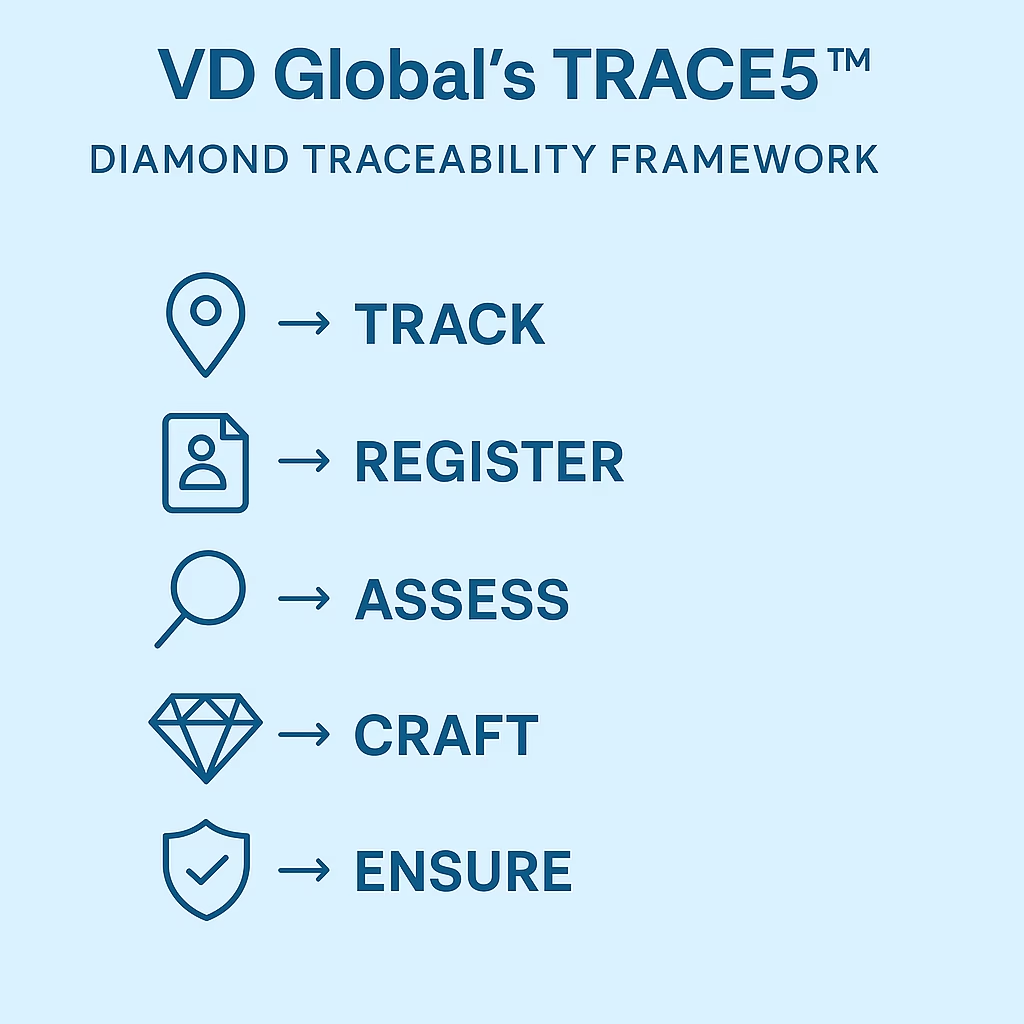
As a De Beers Sightholder working with many of these maisons, VD Global sees this duality firsthand: the need to protect heritage while building new forms of connection and trust.
Exclusivity today doesn’t mean secrecy; it means substance — the ability to prove authenticity, provenance, and artistry through transparent practices and meaningful partnerships.
In a world where visibility is abundant, Italy’s jewelers remind us that discretion remains one of the rarest luxuries of all.
*featured image by Lunati
See also: Made in Italy, Worn on the Red Carpet